
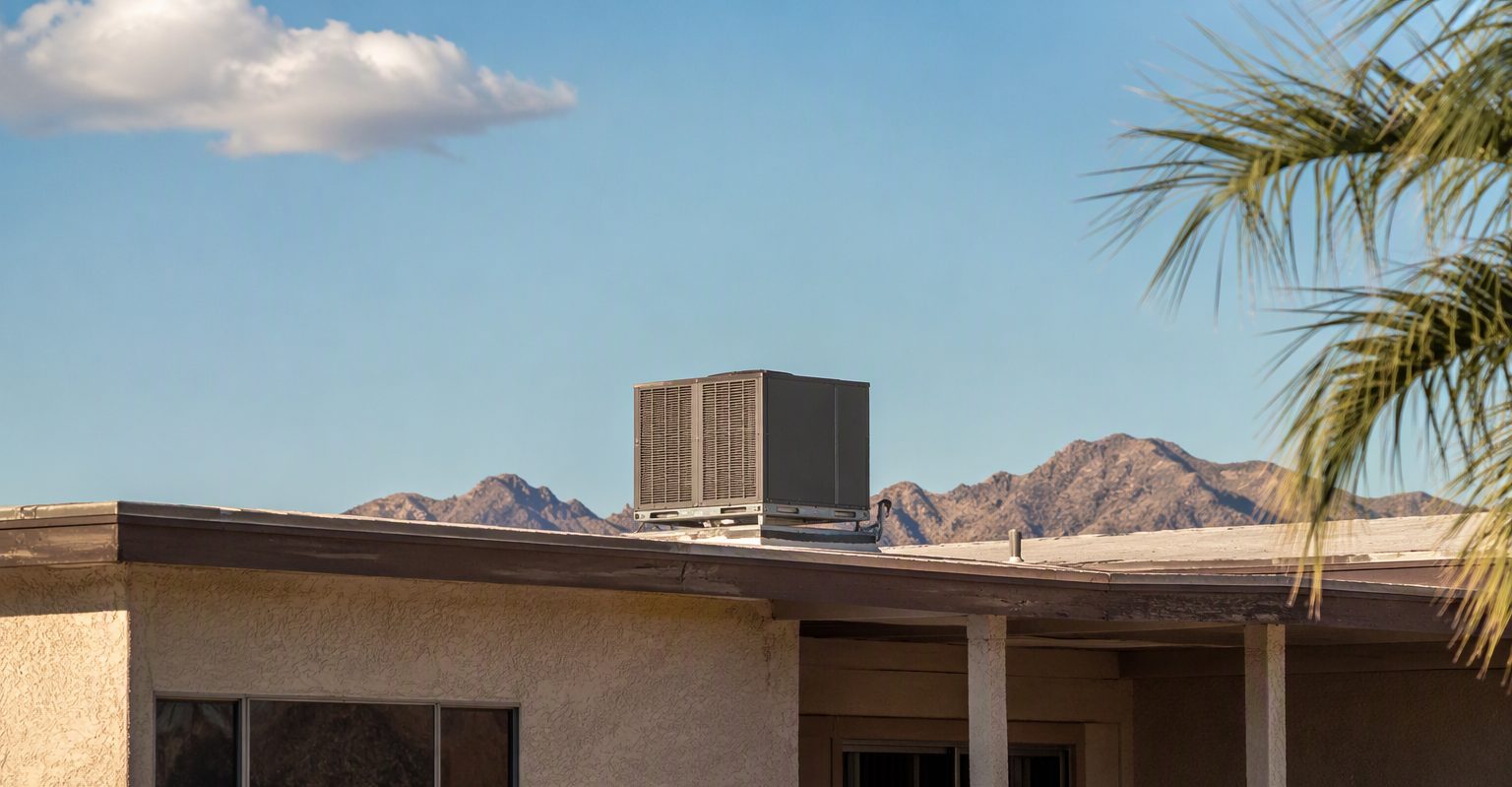
Every city has a signature water loss. Houston has hurricanes, Denver has freeze bursts, and Yuma — Yuma has the swamp cooler. Nearly every roof in the valley carries one: a metal box with a water line plumbed to it, a float valve keeping a reservoir full, running six months a year. It’s a brilliant cooling technology and a plumbed water reservoir sitting directly over your ceiling. When it leaks, it leaks into the attic — quietly, for weeks, in the dark.
The anatomy of the slowest leak in town
The usual failure is the float valve. Mineral scale from desert-hard water builds on the seat, the valve stops closing fully, and the reservoir overfills — not dramatically, just three drips a minute past the overflow’s ability to cope, down through the mounting curb and into the roof deck. No drip in the living room, no puddle on the roof. Just a steady feed of water into the decking, the insulation, and eventually the drywall, day after triple-digit day.
Why nobody catches it in month one
The leak is silent, invisible, and — here’s the desert twist — the symptoms masquerade as normal life. A faint mustiness reads as “swamp cooler smell.” The cooler’s own humidity masks the damp. Summer water bills hide the excess in the irrigation season. The first honest symptom is usually the ceiling: a ring stain, a sagging tape line, paint blistering near the hallway register. By then the attic deck has been wet for a while, and the insulation has been holding water like a sponge.
The check that takes eleven minutes
Once a month during cooling season: look at the ceiling around the cooler’s registers and the hallway below the unit — any new stain, any softening drywall tape, gets investigated same-week. Listen: a float valve that never quite stops hissing is overfilling. And once a season, the attic check — lights on, look at the decking around the cooler curb for darkened wood, staining, or that unmistakable damp-insulation smell. If your unit is past its tenth summer, add “float valve and pan condition” to the service call you’re already having done.
When the ceiling already confessed
The sequence matters: kill the cooler’s water supply first (the small valve on the feed line, or the main if you can’t reach it safely), photograph the ceiling and whatever’s visible in the attic before anything moves, and call. The job is bigger than it looks — not because the stain is big, but because weeks of slow water into decking and insulation means the wet footprint is always larger than the visible one. The moisture map settles it in one visit: what’s wet, how deep, and whether it’s a drying job or a removal job.
The honest math
Caught at the hissing-float stage: a valve part and a dry-out — small money. Caught at the ceiling-ring stage: attic drying, insulation replacement, drywall and paint — real money, documented for the claim. Caught at the “we noticed in October” stage: decking, possible mold, and a claim conversation about how long it ran. The cooler is going to sit up there with its water line either way. The eleven-minute check is what decides which version of the story your house tells.