Every burst pipe in Yuma is a surprise, and almost none of them should be. Supply lines, shutoff valves, and water heater fittings live in the hottest, least-visited corners of the house — garages that hit 140 in July, west-facing sink cabinets, attic runs — and they telegraph their failure for weeks before they let go. Here are the six signs, and the ten-minute monthly habit that catches them.
1. The rust ring
A faint rust halo on a shutoff valve body or a fitting means the fitting has been weeping — not leaking, weeping — long enough to corrode. Corrosion doesn’t stabilize; it progresses. A weeping fitting is a burst fitting with a future date on it, and the date is always sooner than the homeowner assumes.
2. The bulge or bubble in a braided line
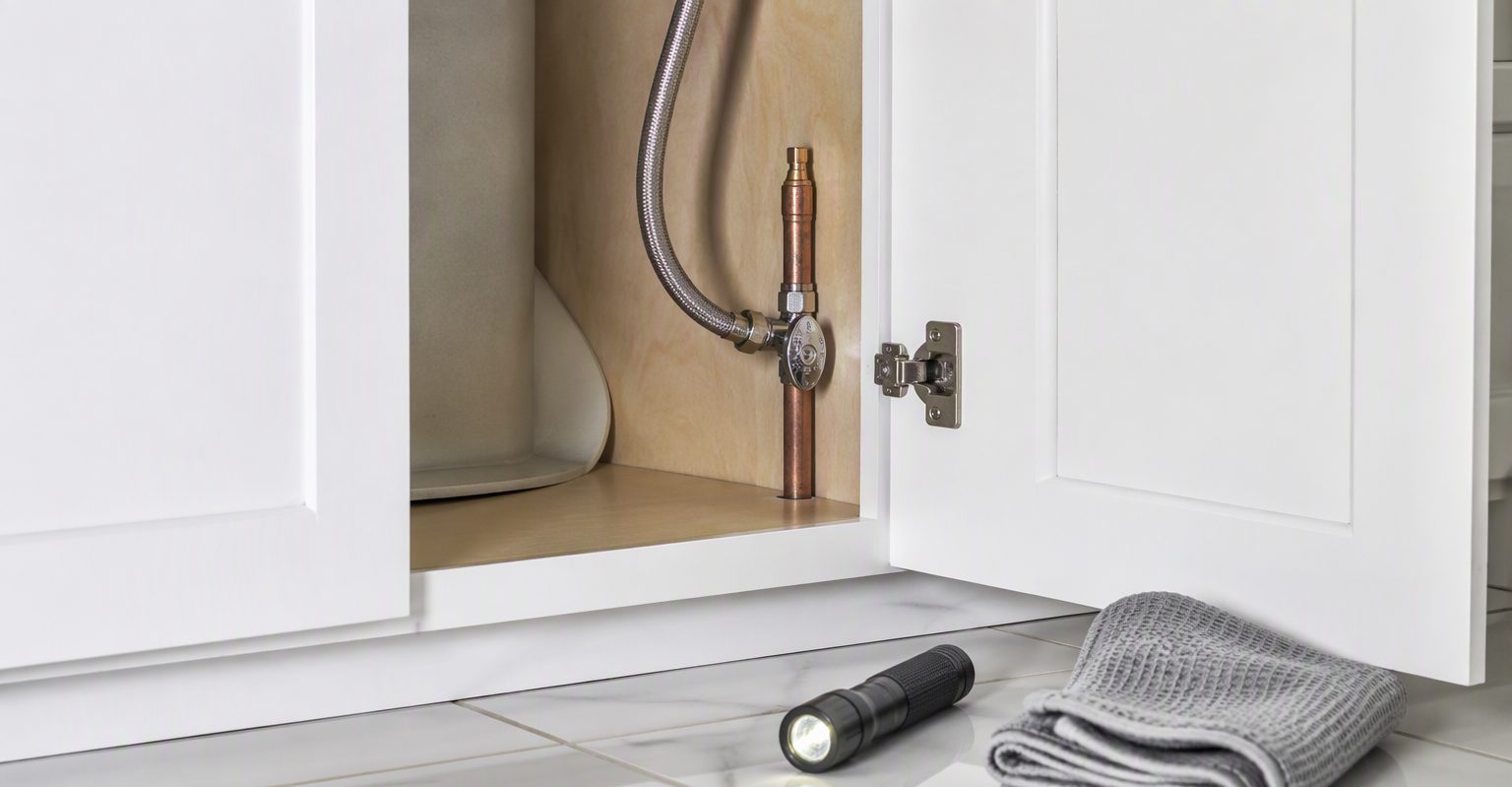
Stainless-braided supply lines fail from the inside: the rubber core degrades — faster in heat — until it bubbles out through the braid like a hernia. Run your fingers along every braided line under every sink and behind the washer. Any bulge, any soft spot, any fraying of the braid: that line is done. It’s a five-dollar part that becomes a five-thousand-dollar loss on the day it chooses.
3. Green crust on copper
That white-green mineral crust where copper meets a fitting is evaporated leak residue — water has been escaping there in amounts too small to drip. In a dry climate the evidence survives instead of washing away, which makes it a gift: crust means the joint is failing. There is no version where it gets better on its own.
4. The water heater’s confession corner
Garage water heaters in this valley live brutal lives — ambient heat all summer, sediment from hard desert water settling in the tank, the anode consumed years ahead of schedule. Signs: moisture or rust streaks at the base, the T&P valve discharge line that’s damp or mineral-stained, rumbling sounds from sediment. A tank at year ten in a Yuma garage is on borrowed time, and tank failures don’t leak — they empty.
5. The meter that never stops
Your water meter is the simplest leak detector ever made: turn off every fixture in the house, then watch the meter’s low-flow indicator for ten minutes. If it moves, water is going somewhere — and if nothing in the house is on, somewhere is inside a wall, under the slab, or in the yard line. Slab leaks in particular love to run for months, heating one mysterious warm spot on the floor.
6. The winter-visitor blind spot
If the house sits empty May through October: a line that fails in June runs until a neighbor, a water bill, or October finds it. The mitigation is unglamorous and total — shut the main off on your way out, or install an automatic shutoff with leak sensors. Every vacant-home loss we walk into shares the same sentence: “we had no idea.” The shutoff is the difference between a dry house and a summer-long flood.
Found a sign? The order of operations
Don’t tighten, tape, or hope — a weeping fitting that’s disturbed often becomes an open failure. Shut the fixture’s local valve (or the main), photograph what you found, and call. If it’s already burst: main off, breaker to any wet room, photos, call — in that order. Small leaks don’t stay small; they just stay quiet. The monthly ten-minute walk-around is the interruption.