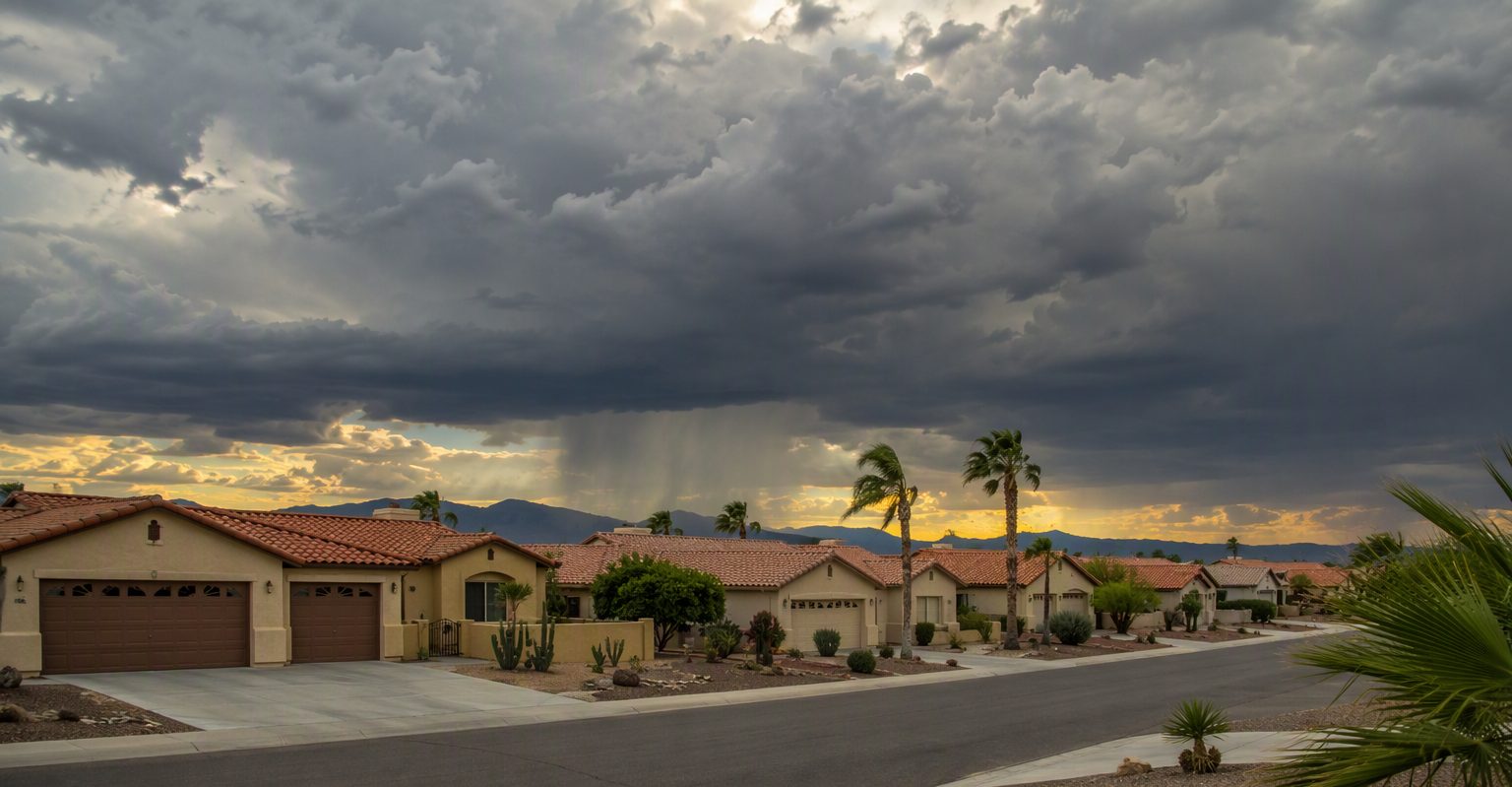

Valley roofs live a harder life than they let on. The tile you see from the street can look immaculate while the underlayment underneath — the actual waterproof layer — is being cooked brittle by UV year after year. Then a monsoon microburst arrives, lifts a few tiles, drives rain sideways under the rest, and the underlayment that should have caught it crumbles instead. The first symptom most homeowners get is the ceiling stain. Here are the six that come earlier.
1. Tiles out of formation
Walk your yard after any wind event and look up: tiles that slipped, tilted, or broke formation are the roof telling you where it’s open. A microburst’s straight-line winds get under tile edges and lift — you’ll often find the evidence in the yard or the driveway before you see it on the roof. Each displaced tile is an exposed patch of underlayment taking direct sun and direct rain, neither of which it’s rated for long-term.
2. Grit in the gutters and at the downspouts
On concrete or clay tile with any cement work — ridge caps, valleys — granule and grit accumulation at the downspout outlets means the cement is eroding. It erodes from UV and from every storm that sheets across it. A handful after a monsoon cell is normal; a steady supply every rain is the mortar joints asking for attention before they become openings.
3. The fascia and drip edge line
Look along the roof’s edge in afternoon light. Staining, swelling, or paint failure along the fascia means water is getting past the drip edge or ponding at the tile line — a low-slope and edge-detail problem that monsoon ponding makes worse every storm. This one matters doubly on flat and low-slope sections, where scuppers clog with a haboob season’s worth of dust and debris.
4. Daylight in the attic
The five-minute attic check, done on a bright afternoon: lights off, eyes adjusted, look for pinpoints or lines of daylight — around penetrations, at the ridge, along valleys. Anywhere light gets in, monsoon rain driven sideways gets in better. While you’re up there: darkened decking or stained rafters around a swamp-cooler mount or a vent is water that already found the route.
5. The ceiling’s quiet announcements
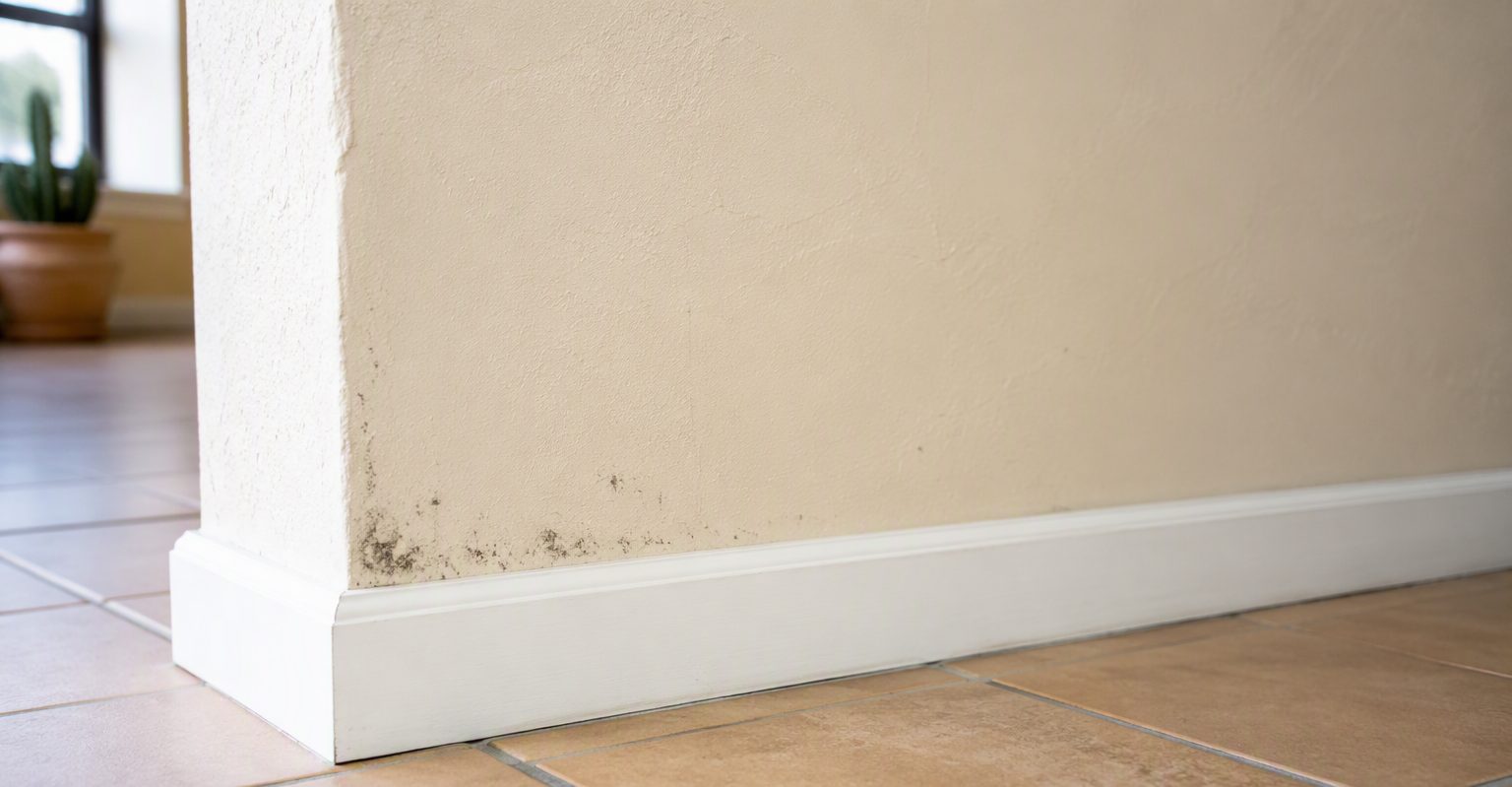
Before the stain: a hairline crack that grows after storms, a corner of crown molding pulling away, paint that bubbles in a small circle, a faint ring that photographs better than it shows to the eye. Ceilings confess slowly at first. The two weeks after any big monsoon cell are the inspection window — check closets, hallways, and the garage, not just the living room.
6. Your neighbor’s roofer
Microbursts work in strips. If two houses on your street are getting tile work after the same storm, your roof took the same wind — it just hasn’t announced itself yet. That’s the moment for the quick inspection, not after the next cell adds water to the first one’s opening.
If the ceiling already confessed
Photograph everything, contain what you can, and call — a roof opening through one more monsoon afternoon doubles the water loss. Emergency tarping stops the bleeding, extraction and drying handle what got in, and the whole thing gets documented for the claim from minute one. The roof repair is the roofer’s trade; everything the water touched is ours.