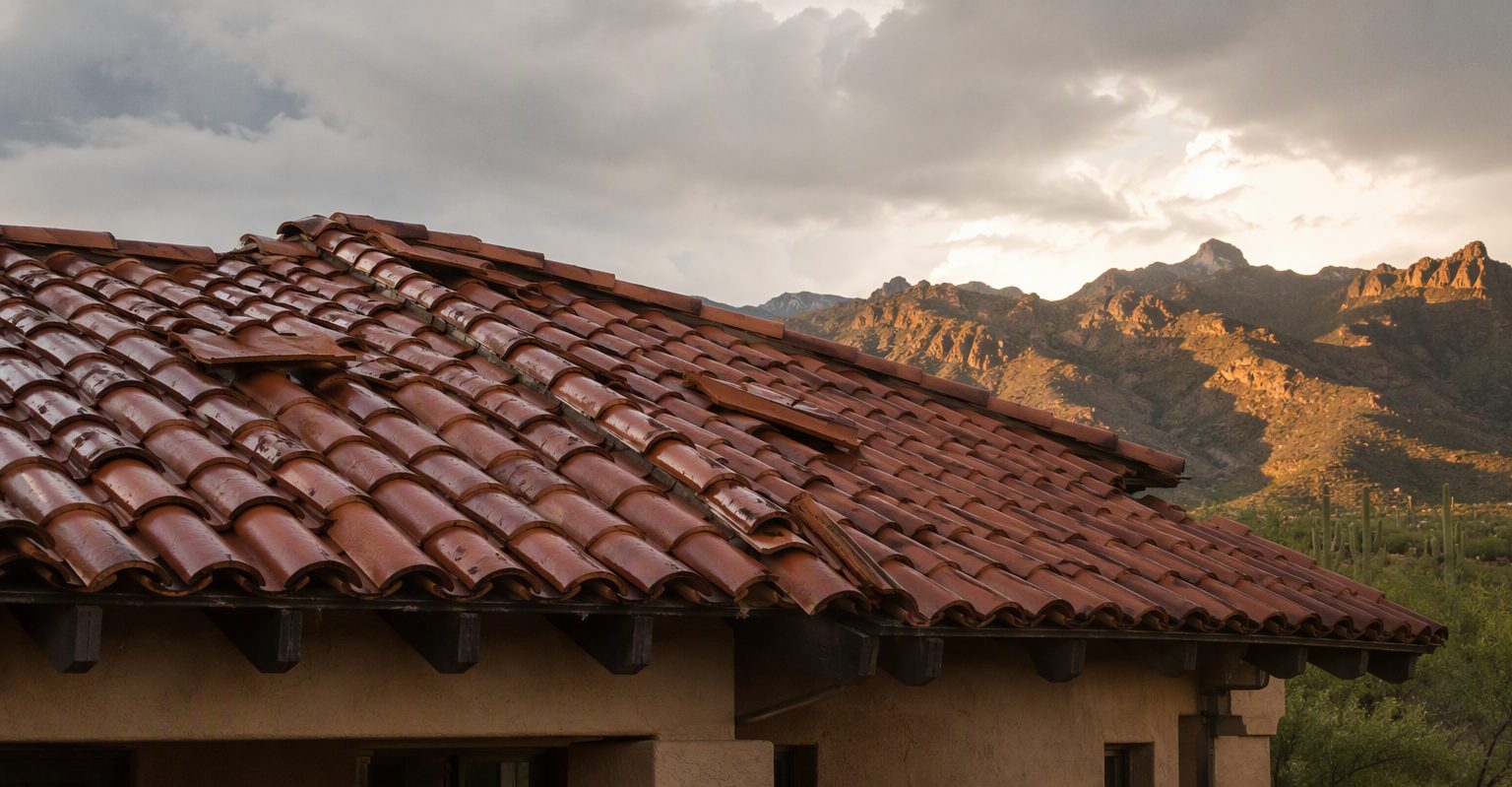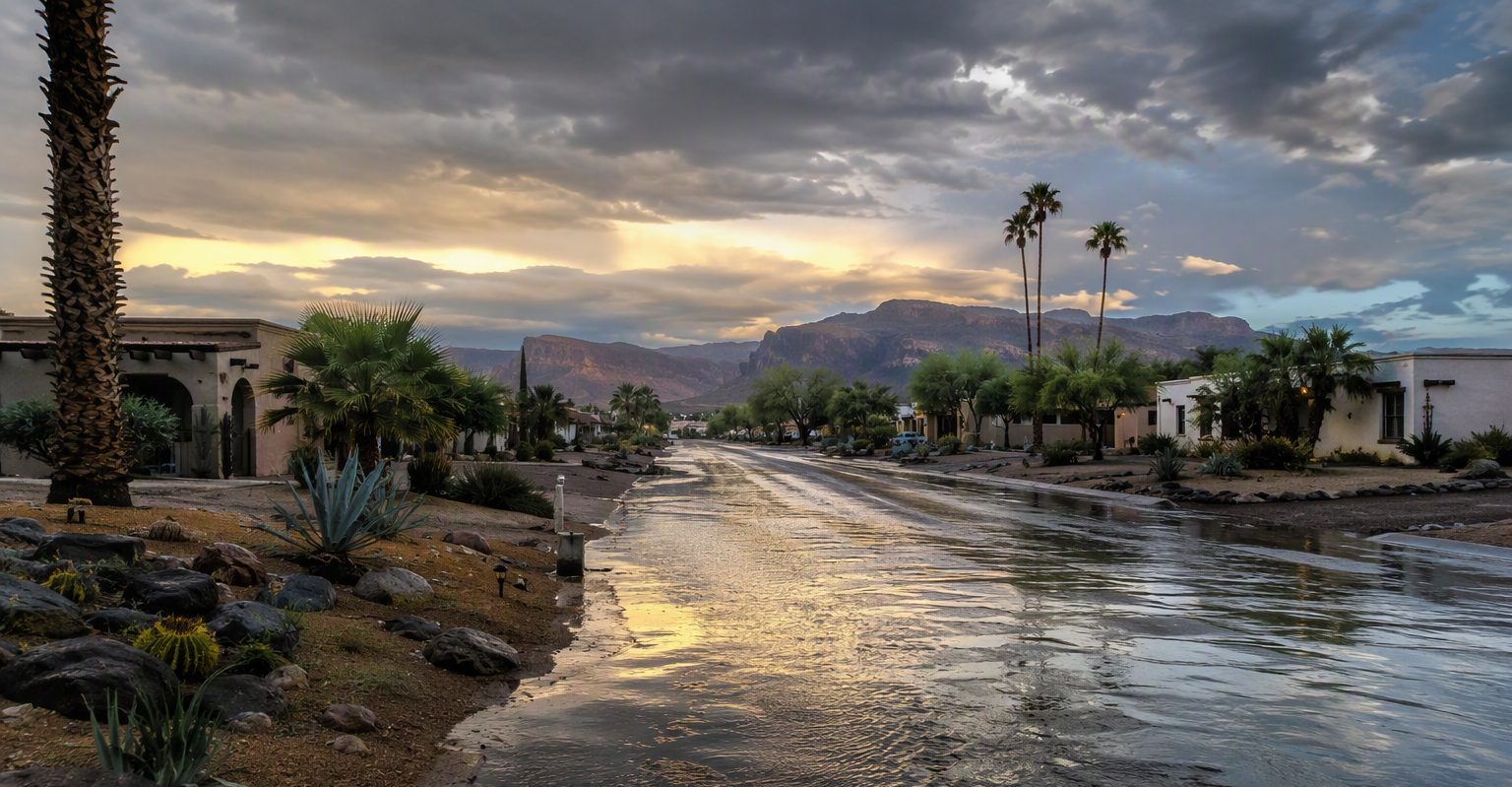
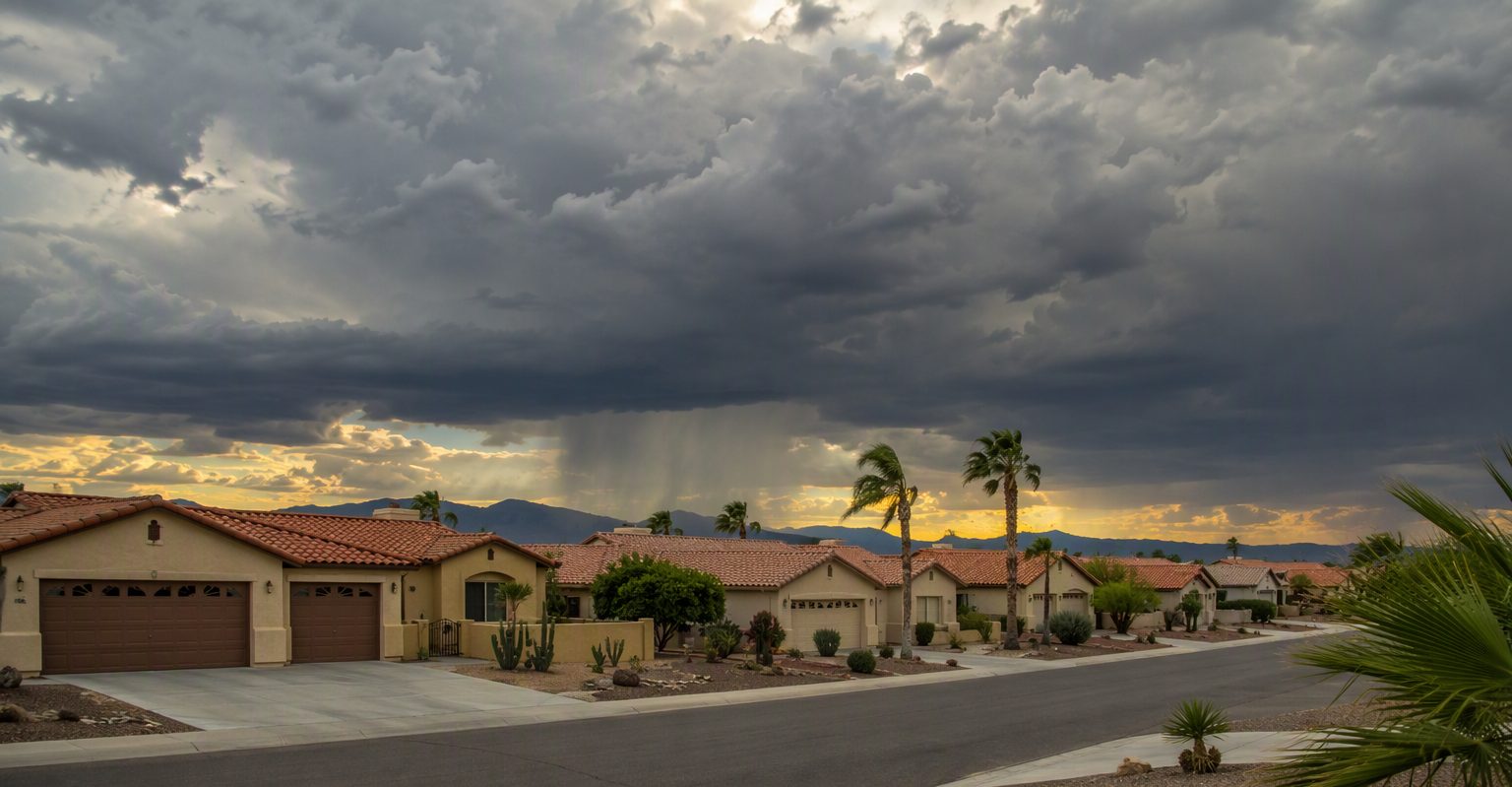
Yuma doesn’t get hurricanes — the Pacific off Baja is too cool, the land crossing too rough, and by the time anything organized reaches Arizona it’s a ghost of itself. But ask anyone who was here when a remnant system parked over the valley: the ghost still rains. Hurricane season is absolutely a Yuma water season — it just arrives as moisture, not wind. Here’s how the mechanics work and what they do to houses.
The pipeline: Baja to your living room
Eastern Pacific hurricanes form off Mexico all summer and fall. Most die at sea or shred against the Baja peninsula — but their moisture doesn’t die with them. The remnants — deep tropical moisture plumes — get pulled north up the Gulf of California and into Arizona, where they supercharge the monsoon: instead of a forty-minute cloudburst, the valley gets day after day of soaking tropical rain. One remnant event can deliver a year’s worth of rain in a long weekend, on caliche ground that rejects all of it.
Why soaking rain beats cloudburst rain (for damage)
Desert construction is engineered for the normal bargain: intense sun, brief storms. Tile roofs shed a cloudburst fine — but their underlayment, baked brittle by a decade of UV, fails under sustained soaking. Window and door seals that handle a passing cell give up on day three of rain. Flat and low-slope roof sections pond. The losses that come out of remnant weeks aren’t dramatic microburst tears — they’re a thousand slow admissions through every aged seam in the envelope, discovered as ceiling stains a week later.
The monsoon baseline
Even without remnants, mid-June through September is the valley’s water season. Haboobs roll dust walls ahead of the cells. Microbursts drop straight-line winds on four blocks and skip the fifth. And the classic monsoon hour — an inch of rain on ground that can’t absorb it — turns every low slab and sliding-door track into a flood line. It’s the same sixty days every year. The houses that come through dry are the ones whose owners treated June like the coast treats hurricane season: seals, drainage, and a roof check before the sky starts.
The prep list, desert edition
Before June: walk the roofline (or have it walked) — displaced tiles and cracked underlayment edges are invisible from the couch. Re-seal window and door caulking; desert UV cooks it faster than the calendar suggests. Clear the swales, scuppers, and drainage cuts so storm water has its designed path. Know your slab height relative to the curb. Photograph the house dry and intact — the before-and-after file is the strongest claim document that exists, and it only exists if you make it in May.
When the remnant week wins anyway
Photograph what you find before touching it — the stain, the waterline, the wet floor. Don’t assume it’ll dry itself; sustained-rain losses saturate deep, and desert air doesn’t reach inside wall cavities. Then call: the moisture map tells us whether it’s a drying job or a removal job, and post-storm slots fill in the order the calls come in. The storm gets the headline. The water does the damage. Prep for the water.